• Previous homepage
  • Featured stories
  • Archive
  • Photos
  • About
  • Contact

Mark Sissons

  • Previous homepage
  • Featured stories
  • Archive
  • Photos
  • About
  • Contact


Mark SissonsTravel journalist
JournalismOriginal storiesCommissioned contentPhotographyAboutWork with me ↗
Original stories / Peru

A Billion Reasons to See

How a small Vancouver charity is opening a new front in the global fight against preventable and treatable vision loss, including blindness.

Patients waiting to be examined at the Divino Niño Jesús eye clinic in Iquitos, Peru
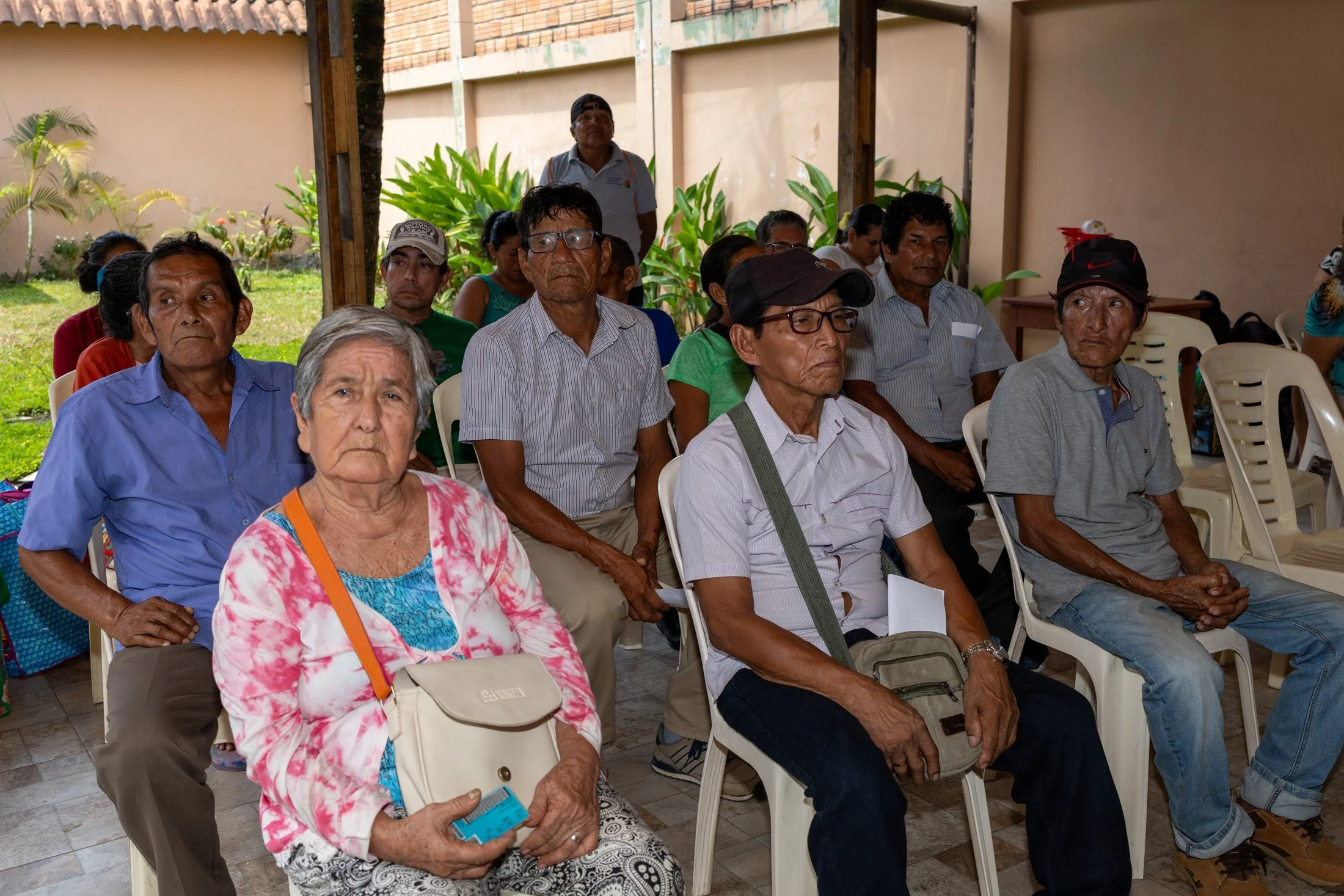
Patients wait to be examined at Clínica Oftalmológica Divino Niño Jesús in Iquitos. Photograph: Mark Sissons.

By Mark Sissons · Reporting from Lima and Iquitos

The first thing Hilda did the morning after surgery was sit outside her house in the Peruvian Amazon and look at her grandchildren. She had not seen their faces clearly in ten years. They had been growing up at the blurred edges of her vision, and now here they were: their features settling into shapes she knew. Everything was still a little out of focus, the operated eye adjusting, but it was there. She looked at her husband and confirmed what she had always known. He was handsome.

Hilda was seventy. Her sight had started to go when she was sixty-two, and for almost a decade after that, she saw no eye doctor at all. She did what people around her did, on the advice of traditional healers. She put coconut water in her eyes. She tried drops of her own urine. None of it worked because none of it could. The nearest clinic was in Iquitos, three hours away and down a river, and like most people in her community, she had no way to pay for the surgery even if she reached it.

Seva Canada and its Peruvian partner, Clínica Oftalmológica Divino Niño Jesús (DNJ), gave it all to her. The surgery took about 15 minutes.

The gap

The scale of the need in Peru is hard to take in. Around 4.7 million people there live with some degree of vision loss, and more than 226,000 are blind. The public health system can't keep pace, especially since the pandemic pushed nearly a third of the country into poverty. And the shortfall doesn't fall equally on everyone. A Seva Canada study in Africa twenty-five years ago found that women bore about two-thirds of the world's blindness, a gap later confirmed in Guatemala. Seva Canada shared those findings across the eye care community, and the strategies that followed have since narrowed the gap: today, the figure is 55%. Dr. Marty Spencer, a Seva Canada board member, puts the cause bluntly: patriarchy. Peru is no exception. Care reaches men first, and women wait.

That imbalance runs through most of the world, and so does the problem underneath it. One projection estimates that more than 1.7 billion people will be living with preventable and treatable vision loss by 2050, more than the population of China today. Much of that is refractive error, correctable with a pair of glasses; most of the rest is cataracts. What's striking is that the treatment isn't what's lacking. Cataract surgery is cheap, well understood, and quick in trained hands. The missing piece is everything around the operation. Someone has to find the patients, and there have to be surgeons to do the work, funding to treat those who can't pay, and care afterward to ensure good visual outcomes. That is the gap Seva Canada has worked on for more than forty years. In September 2025, I went with them to Lima and Iquitos.
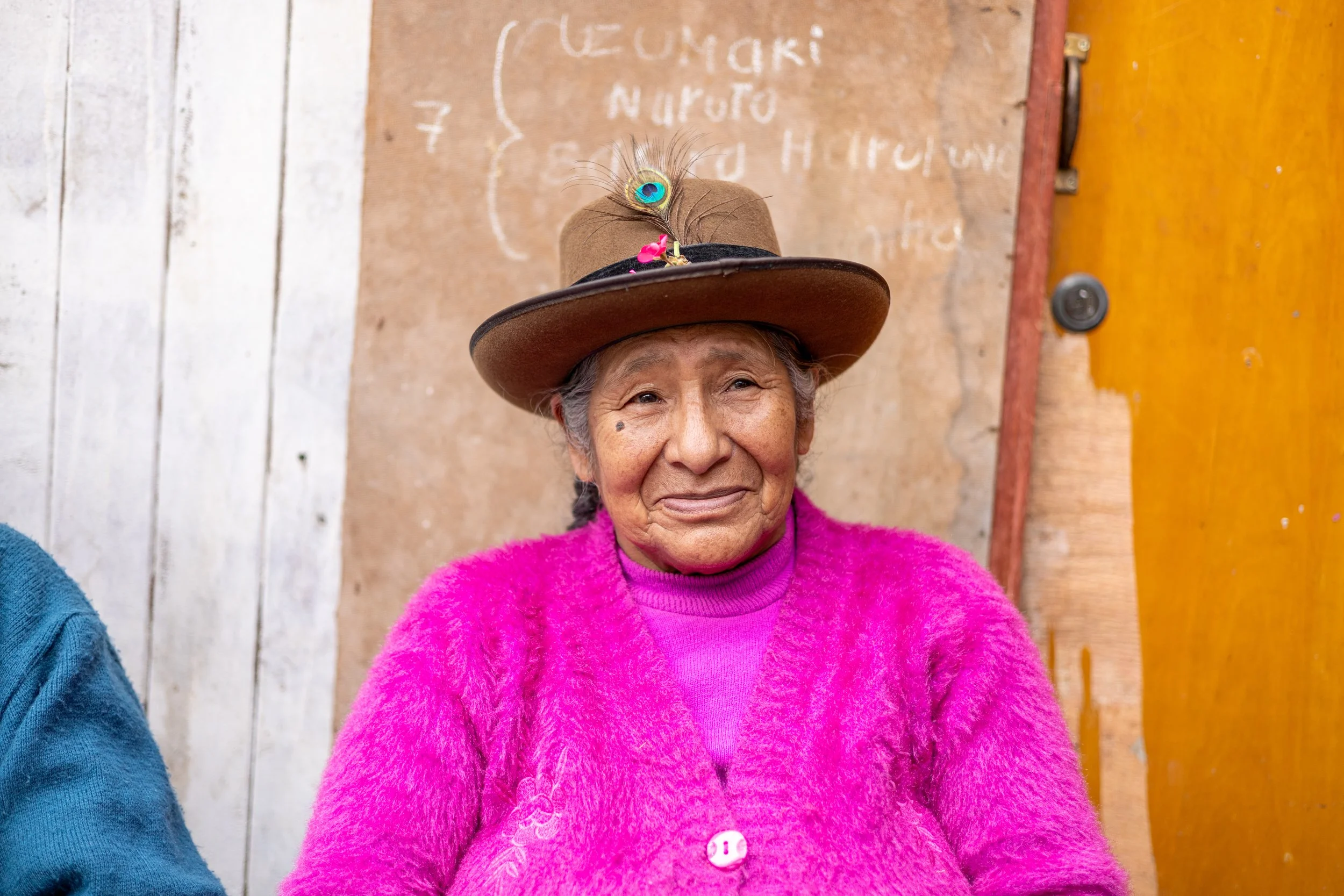
An older woman wearing a brown hat and bright pink cardigan at a doorway
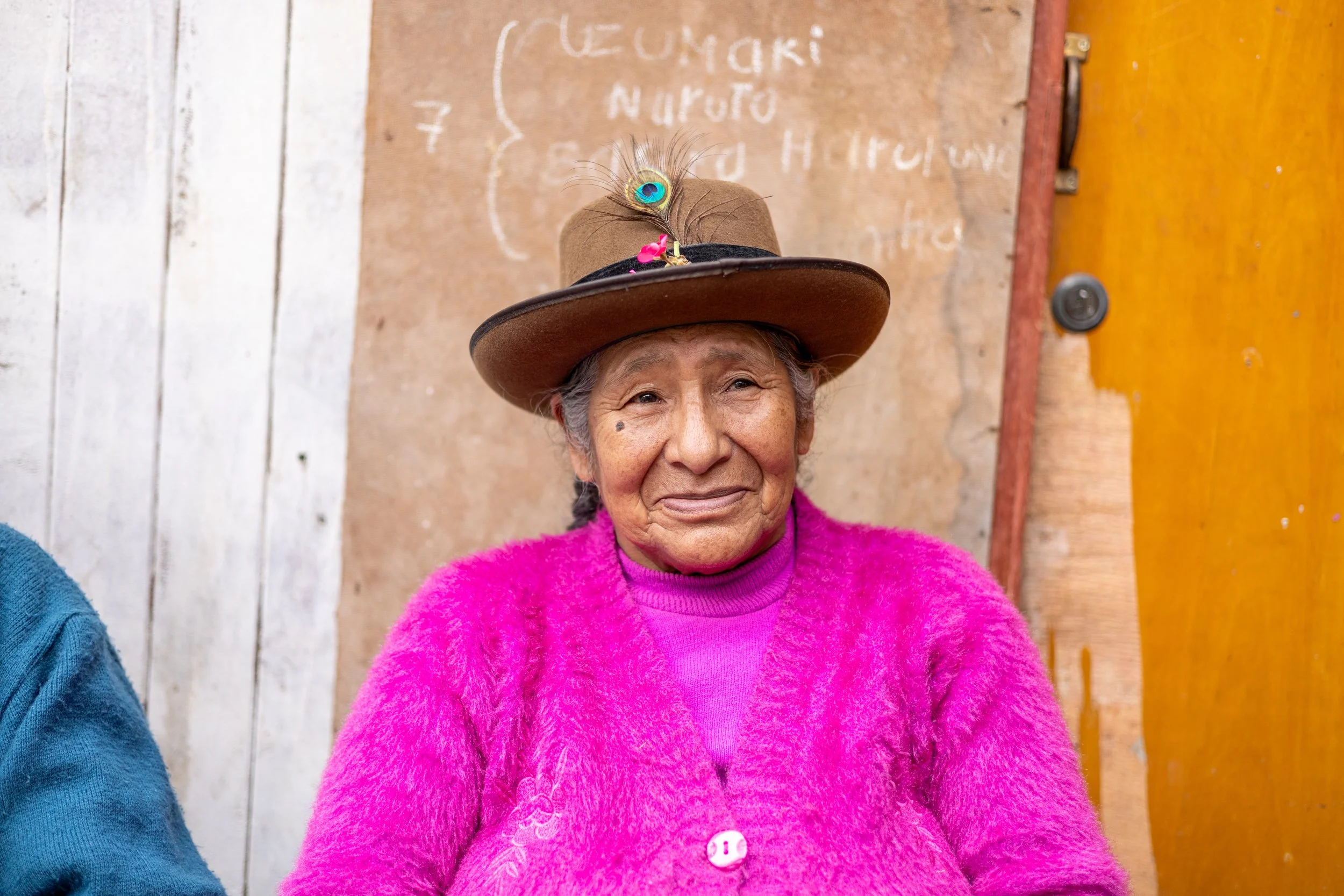
A woman photographed during a home visit in Lima. Reaching people who have gone without eye care is a central part of Seva Canada’s work with its Peruvian partner. Photograph: Mark Sissons.

A common blindness

Aquiles Clares Linares was seventy-eight when I met him. He and his wife lived a day’s bus ride from Lima, and they had come to stay with their daughter in Lima while he sought care. Aquiles was a cattle farmer until his eyes began to fail. One eye went dark first, then the other started to follow, and with them went his ability to do the work that had defined his life. He could no longer walk his animals to pasture. He could no longer walk without falling. His daughter, a single mother who works daily and operates a motorcycle taxi to make ends meet, quietly absorbed everything he could no longer do, while also managing her own family, her own precarity, her own exhaustion.

When I visited before his surgery, Aquiles sat in a plastic chair in a small, dim room and thanked me for coming. "Even if my home is humble," he said, "my heart is sincere." He told me plainly that he was poor and could never have afforded the operation. His vision had begun to darken three months earlier. Now one eye had gone completely dark, and he could make out his cattle only as shapes at a distance. He had started to fall. When I asked what he wanted from the surgery, he said he wanted to work again, to walk well, and to see his animals and his family.

In one of the poor barrios in the hills ringing Lima, a seventy-two-year-old woman named Agripina González had reached a different kind of limit. Originally from Machaca, in the Andean region of Apurímac, she had been losing her vision for two years. She had stopped cooking. She had stopped farming the corn and wheat she'd tended her whole life. Her daughter described her standing in her own kitchen, unable to help, "like a child." By the time she reached a DNJ screening, she was no longer walking so much as crawling, leaning on a stick.

Both of them had cataracts. Both conditions were entirely curable.
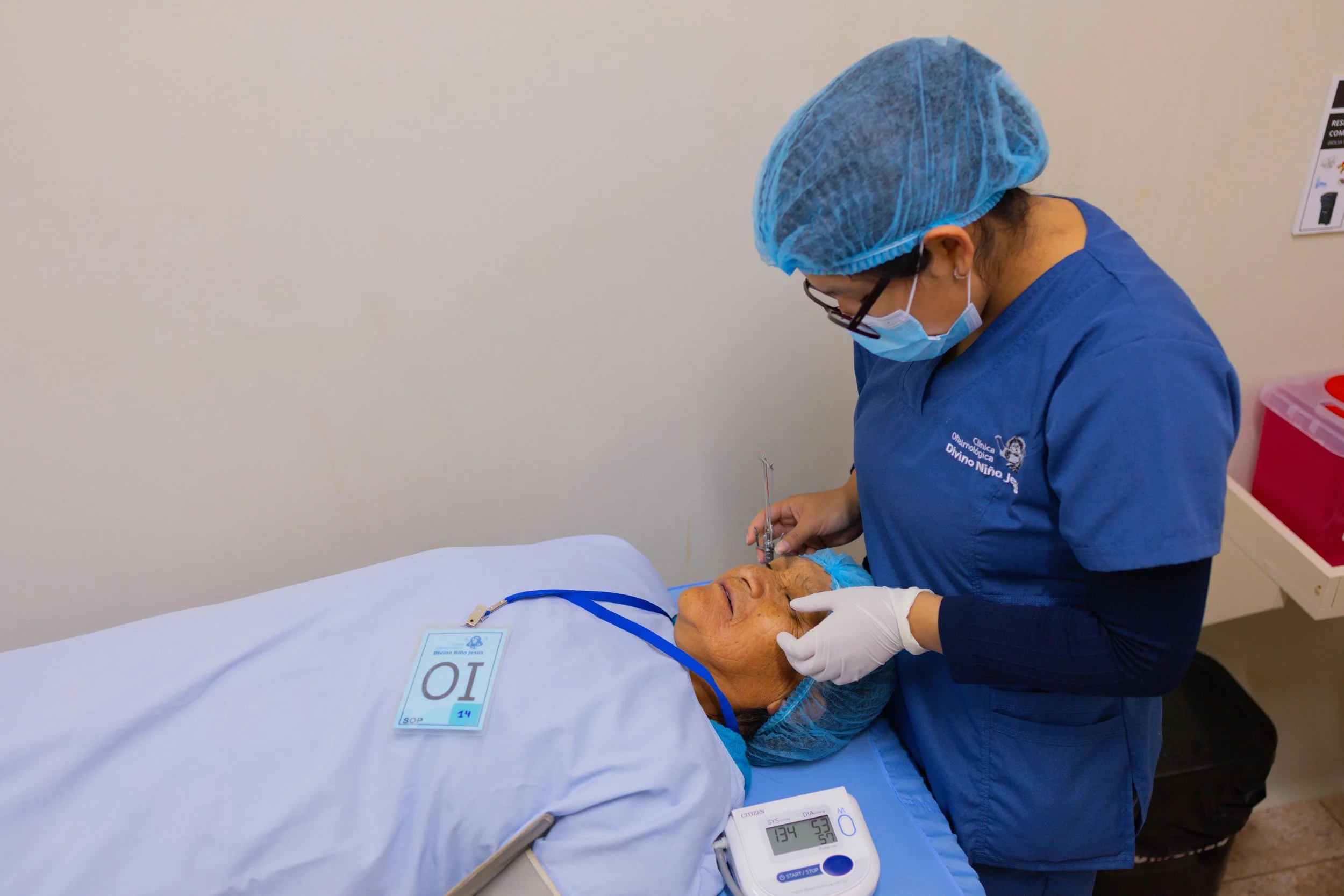
A clinician caring for a woman lying on a hospital bed
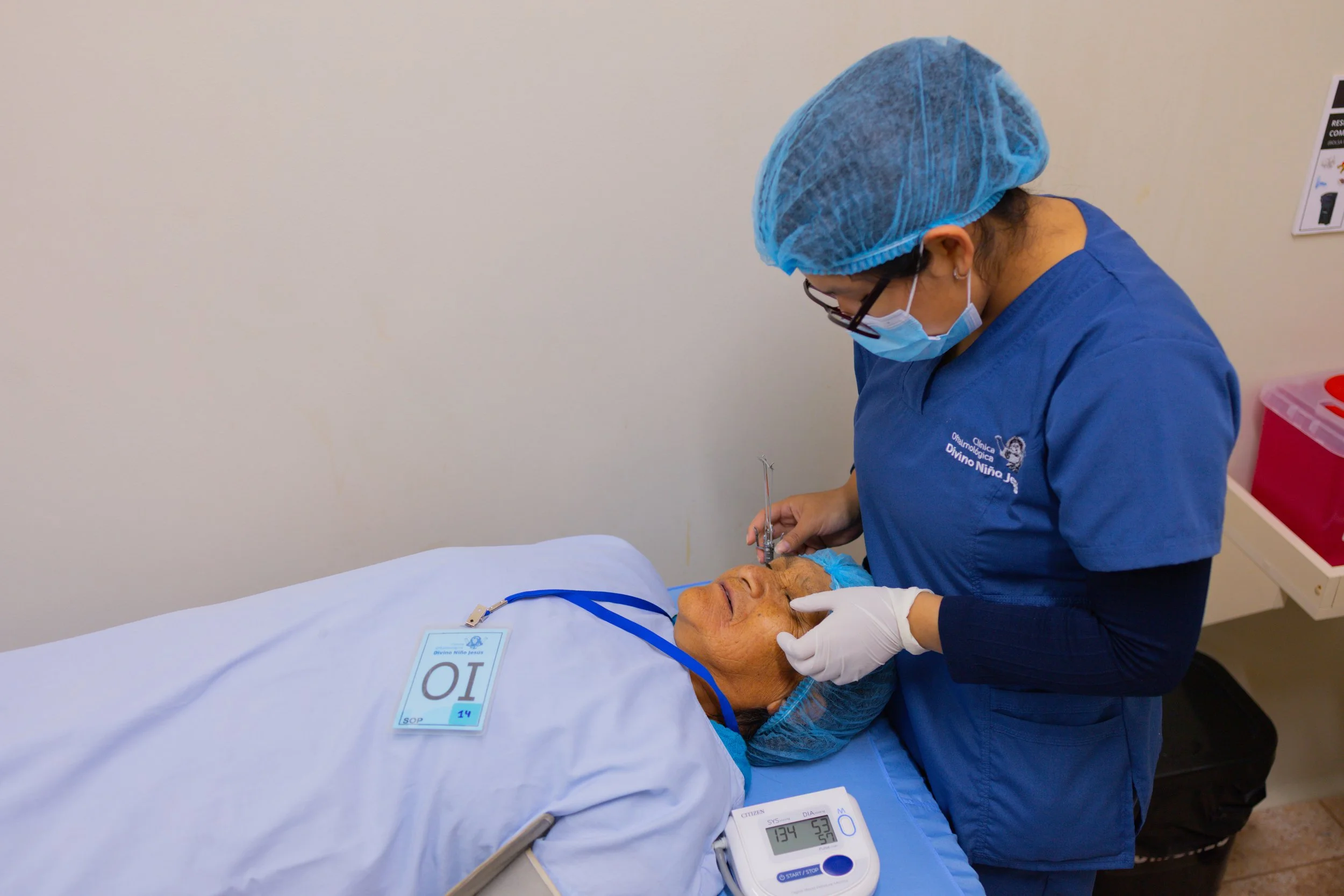
A staff member at Clínica Oftalmológica Divino Niño Jesús attends to a patient in Lima. Seva Canada supports the local organization with funding, training and equipment. Photograph: Mark Sissons.

Systems and scale

Maria Julia Gupio de Asmat founded Clínica Oftalmológica Divino Niño Jesús in 2005 and recruited Alberto Lazo Legua as its first administrator. He has been executive director since 2015. An engineer and MBA by training, he is a health administrator by vocation and, by temperament, a man who thinks primarily in systems, processes, and scale. His desk at the hospital in Lima is covered with spreadsheets, surgical schedules, and outreach maps.

The thing he says most often, in various forms, is some version of this: the hard part isn't the surgery. The surgery is fast, the outcomes are immediate, and the transformation is almost impossible to overstate. The hard part is finding the people who need it, convincing them that something can be done, getting them to a clinic, and keeping them from falling back through the gaps afterward.

"We can do ten surgeries," he told me. "But I know that the community needs five hundred."

DNJ operates two hospitals, one in Lima and one in Iquitos, and a network of outreach and Community Eye Centres that extend into surrounding communities. In Iquitos, where nearly half of all patients in 2025 received care for free, the operation's economics require constant creative management. The cost-recovery model that underlies DNJ's work, adapted in part from Alberto's formative visit to Seva Canada’s partner in India, the Aravind Eye Care System, two decades ago, means that patients who can afford to pay for their care subsidize those who cannot. It is not a perfect system, but it is a functioning one, and in a city where poverty is deep and the pandemic recession left lasting damage, functioning is not nothing.

The river
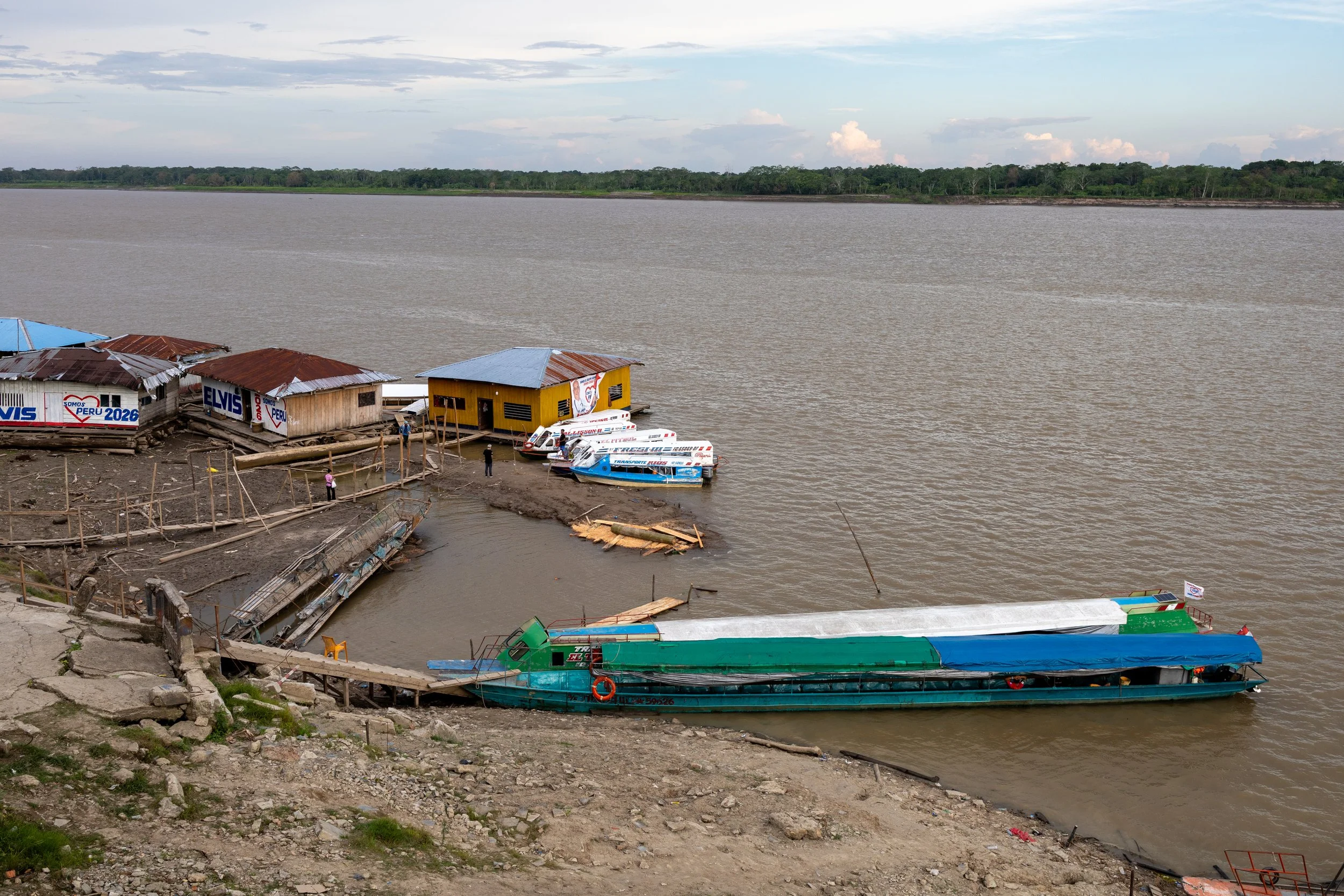
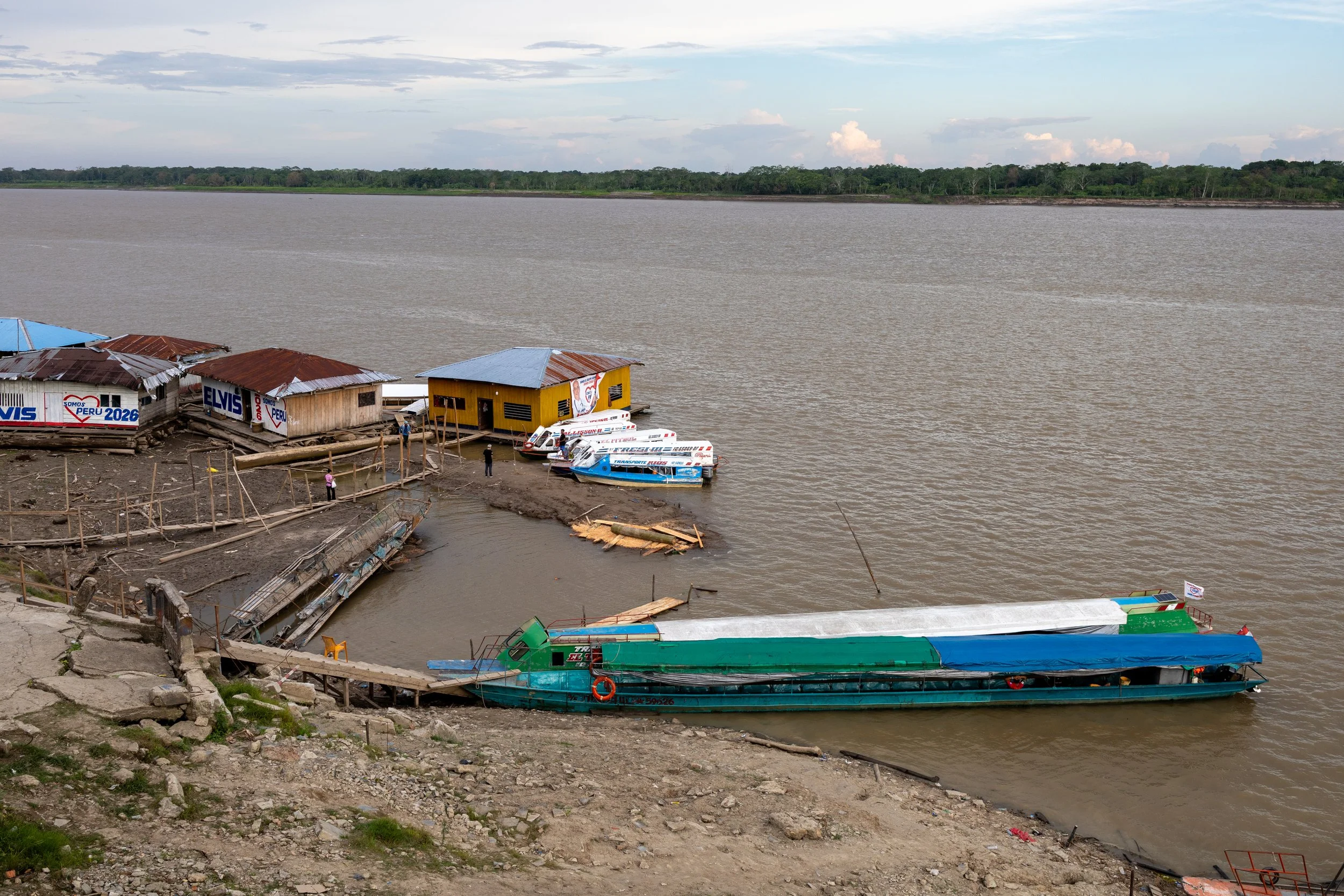
A long passenger boat moored beside riverside houses in Indiana, Peru
Passenger boats line the riverfront at Indiana in the Peruvian Amazon. River travel is central to DNJ’s outreach to communities beyond Iquitos. Photograph: Mark Sissons.

The outreach program in the Amazon around Iquitos had been dormant for six years by the time I arrived. Funding from a previous partner had ended. Then the pandemic arrived and consumed whatever remained of the organization's capacity for expansion. When Seva Canada came into the picture in 2024, marking the Vancouver-based charity's first expansion into South America, one of the first things it helped restart was the river outreach.

Communities along the rivers surrounding Iquitos are five, six, or sometimes eight hours away by boat. Some of them had not received any eye care since 2018. When DNJ ran its first post-pandemic outreach trip to Tamshiyacu, the team screened more than 120 people and brought 24 of them back to Iquitos by boat for surgery. For those 24 people, the journey was the first step in a process they had likely believed would never be available to them.

Getting people to believe it is available is the first, and often hardest, problem. Fear of surgery is universal and not irrational. In many communities, the prevailing understanding of cataract surgery involves the eye being removed, replaced, or otherwise violated in ways that do not correspond to what actually happens. Outreach workers spend as much time on reassurance and counselling as on screening. I'd seen the same fear years earlier at a Seva Canada eye camp halfway around the world in Madagascar, in communities where the organization had worked for years. Half the people screened were still afraid of the operation when they arrived for their appointments. In Peru, the same fears surfaced, in another language.

Trust is the currency here, Alberto says, and it's easily spent. Word travels fast in places like this: one botched operation in a river community, and no one comes back to your clinic or anyone's. One good outcome travels just as fast, and the next year's patients arrive because of it. DNJ has been working in the region for fifteen years, the first five operating out of borrowed hospital space before it had a building of its own. People remember who stayed.

Becoming unnecessary

Seva Canada was founded in Vancouver in 1982, shaped by a philosophy of service that its founders carried over from their time co-founding Seva Canada's sister organization, Seva Foundation, in Berkeley, USA. It has since helped restore the sight of more than five million people through surgeries and provided access to eye care to millions more across Africa, Asia, and Latin America. It is small by global health standards, with a global staff of fewer than ten, and a budget that would not register in the accounting of the large international health organizations. Its smallness is, in a way, its method.

Seva Canada's model is easy to misunderstand because of what's missing from it. The Community Eye Centres that reach remote patients are built and run with local partners, not by Seva Canada itself. The money goes to local partners for training, equipment, outreach, and those partners run everything.

Alberto's organization is the model working as intended: he trained at Aravind in India twenty years ago, came home to Peru, and now runs a network with its own nurse-training program, its own strategic plan stretching to 2030, and ambitions Seva Canada had nothing to do with drafting. Success, by Seva Canada's definition, is to become unnecessary once an eye care program is self-sustaining - trained local eye care staff at all levels who can meet their communities' needs and the program is financially sound.

Dr. Ken Bassett, Seva Canada’s program director when I first reported on the organization in 2015, explained the philosophy this way: Seva Canada works the same way everywhere, helping people solve their own problems with funding, training, equipment, research and lessons carried from other programs that have worked. It assists. It does not direct.

A decade later, the philosophy is intact. In Peru, Seva Canada's role is to make DNJ more capable of doing what it already knows how to do. In the first year of the partnership, Seva Canada funded surgical care for patients who couldn't pay, subsidized new equipment for both hospitals, and helped restart the river outreach program. DNJ did the surgery. DNJ ran the outreach. DNJ employed the staff who had driven the bus once in Iquitos, sat with patients in the recovery room, and answered questions about whether their eyes had actually been removed.
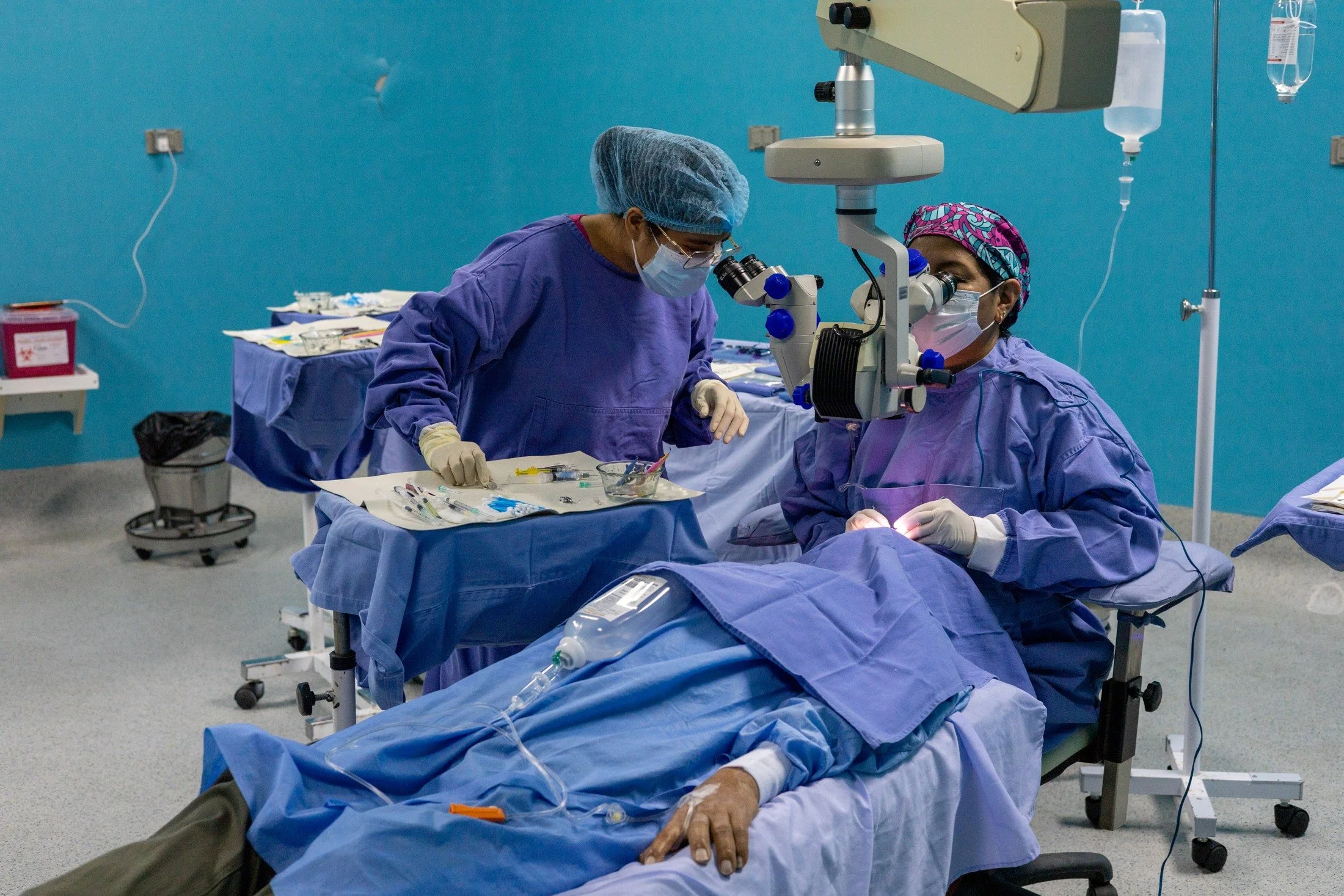
An eye-surgery team working with an operating microscope in Iquitos, Peru
An operating-room team at Clínica Oftalmológica Divino Niño Jesús in Iquitos. Photograph: Mark Sissons.

Ripples

In February 2026, Dr. Marty Spencer travelled to Lima to spend a week with DNJ's surgical team. He went to teach, not pick up a scalpel. A Nanaimo-based ophthalmologist and co-chair of Seva Canada's board, Spencer has spent forty years training eye surgeons across Asia, Africa, and South America.

Spencer says he's always chasing what he calls "ripples." If a visiting surgeon just operates, the work stops the moment they board the flight home. But train one local surgeon well, and they train the next. Years later, you find yourself watching a stranger work. That happened to Spencer in Tibet, watching a surgeon named Songyee make an incision. The technique was identical to Spencer's own, yet he'd never met Songyee before. He had trained the doctor who trained him.

Spencer's week in Lima was spent with the surgeons DNJ had identified. He'd have loved to visit the hospital in Iquitos, he said, but not this time. It hardly mattered to the larger point: the surgeons he trained in Lima are the ones who carry the technique outward, to the base hospital and, eventually, to the river. And the technique he offers them is built for exactly the places too remote to reach.

Spencer is a strong advocate for manual sutureless cataract surgery, the technique that has become standard in most of the settings where Seva Canada operates. In a Canadian hospital, cataract surgery typically involves a machine called a phacoemulsifier (phaco), which is expensive, electricity-dependent, and requires regular maintenance and a reliable supply chain. It was Spencer who helped pare the standard surgical kit down to a handful of instruments simple enough to carry in a shirt pocket. Peruvian surgeons don’t pick up that technique in their own training, though: ophthalmology programs in the country teach phaco only, and anyone who wants to learn manual sutureless surgery has to leave Peru to do it.

That gap is why Spencer was in Lima, teaching DNJ’s surgeons a technique their own training had never covered. Some, including the one who operated on Aquiles, still use phaco day-to-day; in Lima, where the power grid and supply chains are steadier, that’s a workable choice in a way it isn’t in the Amazon.

There, none of those dependencies can be taken for granted. Manual sutureless surgery requires no machine or power supply — it works when the grid goes out. It is, Spencer argues, faster and safer for the dense, advanced cataracts that present in patients who have waited years for care, a claim his own decades of field results back up. Yet the machine-based approach has become the industry standard well beyond Peru, and the manual technique keeps getting pushed further to the margins. Spencer has spent years arguing that this is the wrong default for places like the Amazon, where the equipment a phaco machine depends on simply isn't reliable. Newer and costlier, he maintains, is not always better.

In 2025, Spencer underwent his own cataract surgery, performed by a trusted colleague on Vancouver Island. Even though it was the same routine procedure that he had done countless times, he admits he was nervous going under, and it taught him something about what his patients feel in the chair. Only so much, though. For him, the surgery was a scheduling problem. Aquiles had been going blind for months and had nowhere else to turn.

Why fund surgeries abroad, Canadians sometimes ask, when people here are still waiting for care? Spencer has an answer, and it comes from having been on both sides of it. In Canada, cataract surgery is covered, available, and routine. There's a wait, but there's also a way through. In the Amazon — the kind of place Seva Canada exists to reach — there's no way through to begin with. There's no wait list because, for many people, there's no list at all.
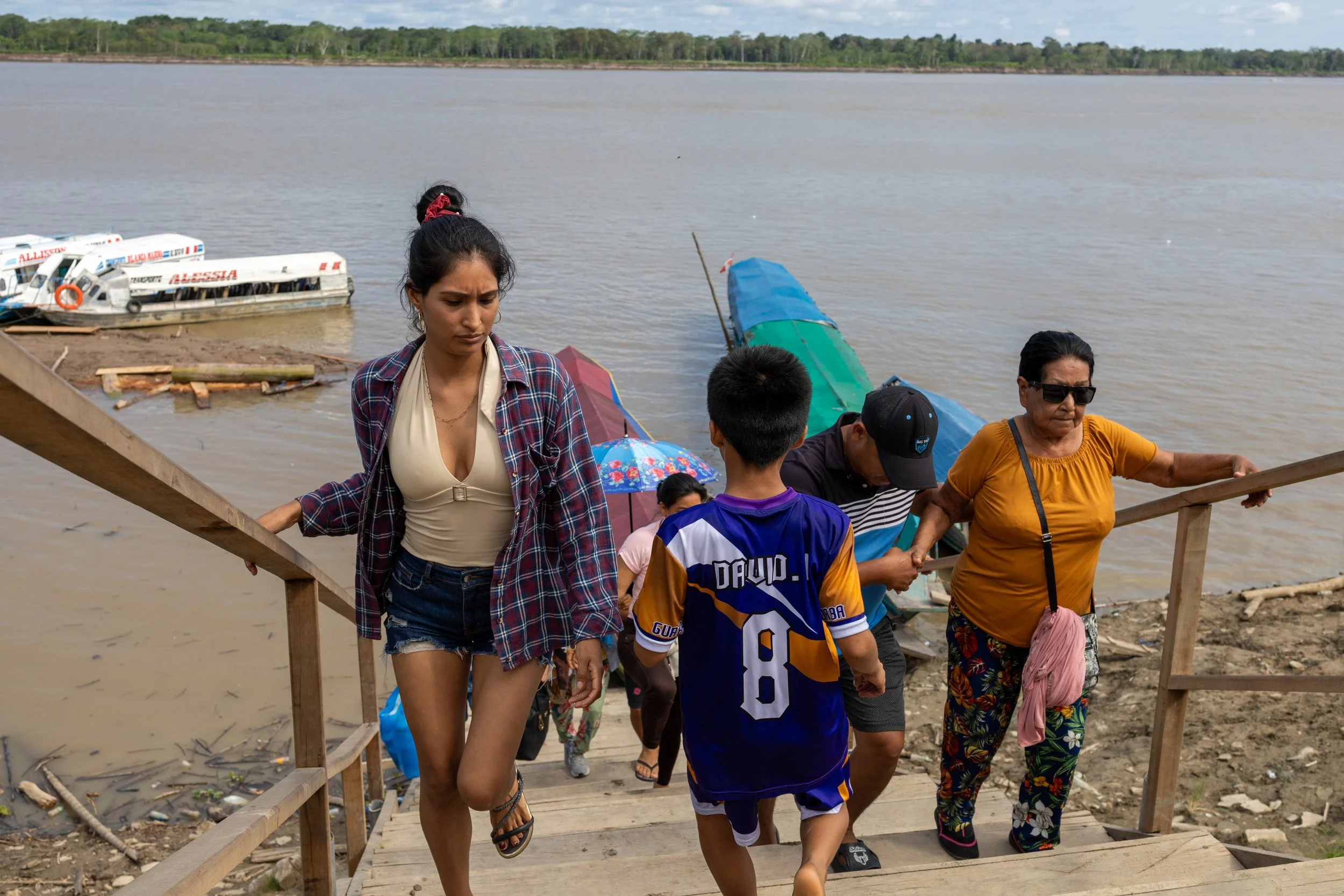
People stepping ashore from a small boat on a broad river
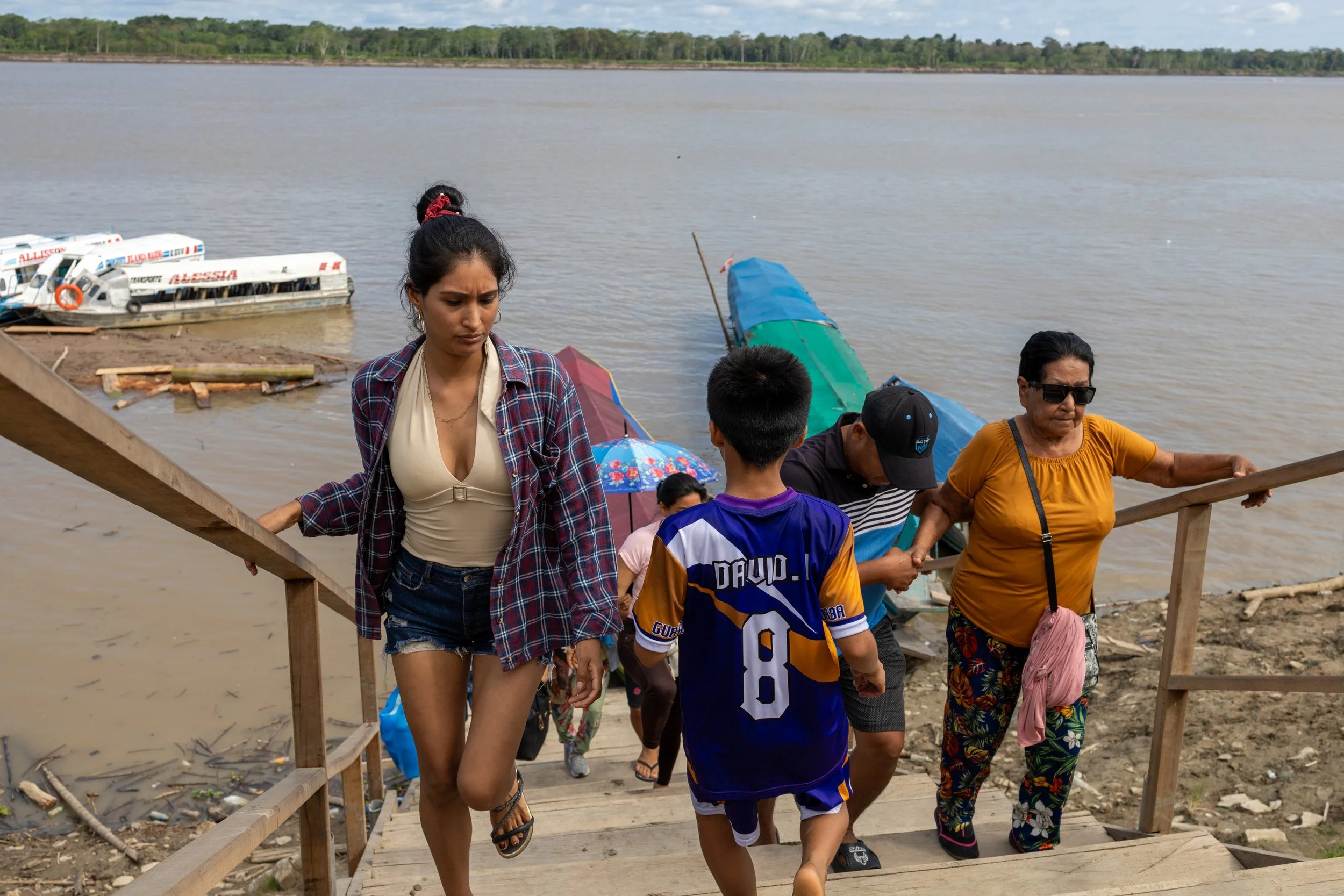
Passengers climb the steps from a river landing near Iquitos. For people in remote communities, reaching eye care can mean travelling for hours by boat. Photograph: Mark Sissons.

Where outreach can go

I first reported on Seva Canada in 2015, at an outreach camp in the highlands of Madagascar, and one moment there stayed with me. A woman named Melline, herself blinded as a child by congenital cataracts and abandoned by her husband when she bore two children with the same condition, had brought her two-year-old son, Rodia, to the camp. She hoped the doctors could spare her son her fate. They could. When his bandages came off the next morning, Rodia saw his mother for the first time. Melline burst into a Malagasy hymn of praise, and the boy began to hum along.

I'd seen this same setup in Madagascar ten years earlier: local outreach, a local hospital doing the surgery, Seva Canada in the background. DNJ itself is no newcomer — Alberto has run it for two decades, and it already has its own base hospital and Community Eye Centres across Lima and in Iquitos. What restarted was the river outreach, dormant for six years until Seva's partnership helped bring it back in 2025. Madagascar and DNJ are different programs, built for different terrain to meet a similar need, not one further along than the other. But watching how Madagascar's outreach had matured offered a glimpse of where Peru's, only just restarted, might go.

Everything again

When I visited Aquiles the morning after his surgery, he was back in the same plastic chair. His sight was already improving, he said: he could make out hands, and shapes where there had been nothing the day before. Through the whole operation, he had been praying, lying on the table with his eye exposed.

His daughter stood nearby and said she had been afraid for a long time. Not just that he would lose his sight entirely, but that he would fall, and that one dark morning she would come to check on him and find him on the ground. She said she had done everything she could to get him this surgery. She didn't expect him to see perfectly. She just wanted him to be able to walk and manage on his own.
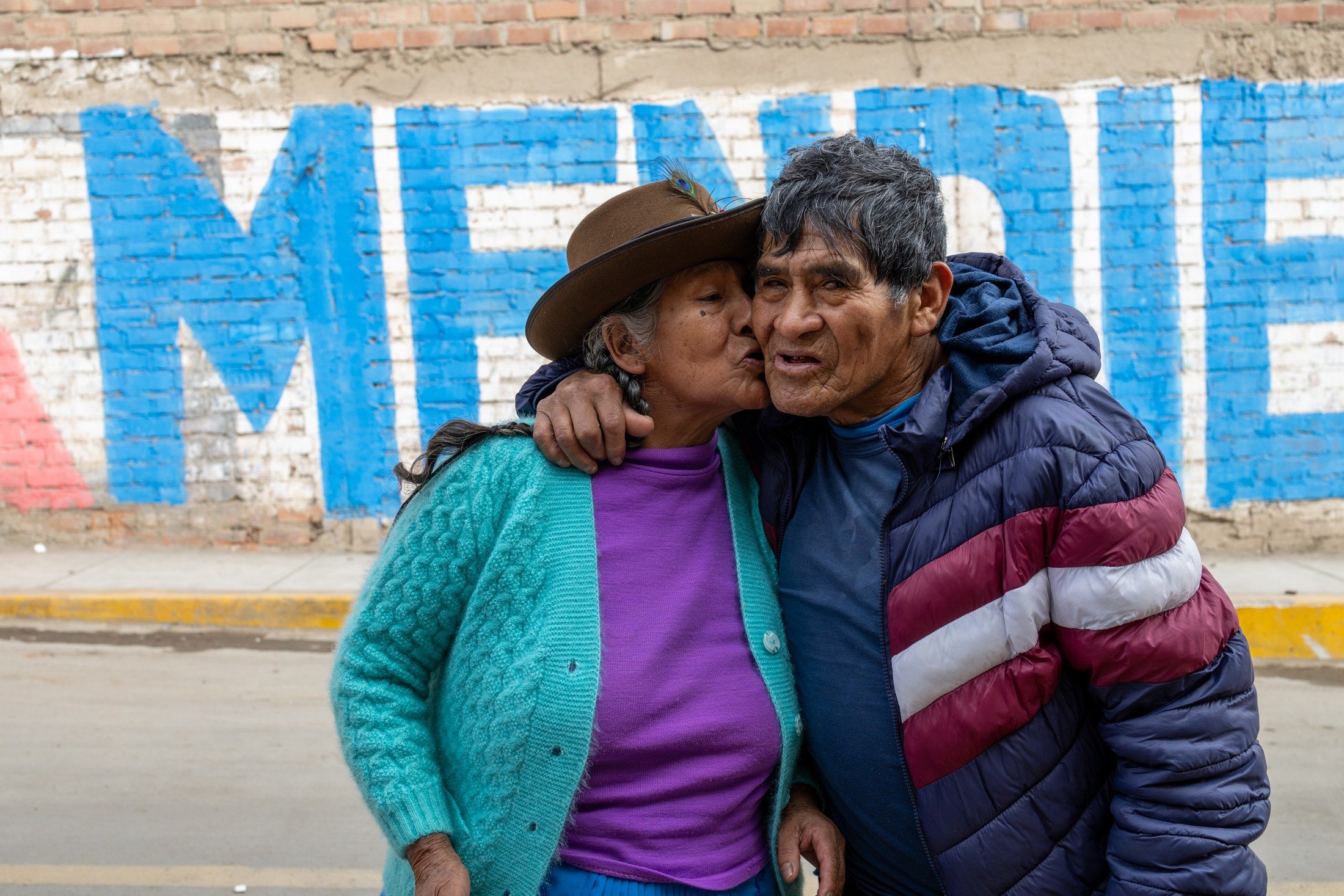
A woman in a brown hat kisses a man’s cheek as they embrace outside a brick wall in Lima
An embrace during a follow-up home visit in Lima. Photograph: Mark Sissons.

Sight-restoring surgery gives patients their lives back. Some call it being reborn. What they want to do with that life, once they have it, rarely is dramatic. Agripina's list of plans, once she healed, ran to cooking, washing clothes, walking, and going to buy things on her own, the way she used to. Asked what she wanted to cook first, she had an answer ready: stew, lomo saltado, potatoes. "I will do everything again," she said.

Julia Muayunga, another post-surgical patient in Iquitos, described what it was like the moment her vision cleared. The surgery itself had unsettled her more than she expected. The doctor had told her to hold still, but she was tired, and her neck wouldn't cooperate; every small shift made her eyes move, and the nerves came on. Then it was over. Before the operation, she told us, she could see only blurry shapes and hear voices. Afterward: "I can see all clearly, and you all are so cute." She laughed when she said it.

Seva Canada calls its latest fundraising campaign Love at First Sight. In the recovery room in Iquitos, the phrase proved apt. Sight comes back, and the first thing it lands on is a face. Hilda’s was her grandchildren's. Aquiles, when his bandages were off, reached for his wife. Julia looked around at the people who had been voices to her for months and told them they were beautiful.

That is what everyone in the chain is working toward, from the surgeons and outreach workers down to the donors in Canada who never see it in person. Not numbers on a report. Faces. People.

What comes next

That was September. The first year of the partnership had already contributed to numbers that surprised even DNJ: 64,799 people screened, 1,678 cataract surgeries, and glasses for 5,068 patients. And, in a country where women have always waited the longest for care, women made up 60 percent of those surgical patients. The global 55% disparity, in its first year working with Seva Canada, had not just been met but inverted. The priority now is shifting again, this time to girls specifically: they carry every barrier women face, plus the added disadvantage of being children unable to advocate for their own care. The program is new; the foundation is there.

Since then, DNJ has run six more outreach trips along the river — including stops in Tamshiyacu, Nauta, Indiana, Mazan, and Aucayo — adding more than 150 surgeries. It has broken ground on the new base hospital in Lima, and Spencer has trained three more surgeons in the manual technique. First-year outreach screening totals, tracked separately by hospital, reached 468 in Lima and 739 in Loreto.

Alberto Lazo Legua, who has spent twenty years building an eye care system in one of the world's most logistically challenging cities, has a vision for the next five years that is typically systematic: a new base hospital in Lima, six Community Eye Centres covering the south of the city, pediatric surgery, residency training, and continued expansion along the Amazon River. He eventually wants to be operating in six of Peru's twenty-four regions, not just two.

When I asked him what keeps him going, given the scale of the need relative to what any one organization can do, he was quiet for a moment, then said something simple. The motivation, he said, is to provide eye care to everyone this model can reach, to refine it every year, and to take it to people who have never had access to it.

"And when you see someone who was blind the day before," he said, "and the next day they can see their family, and they smile." He paused, looking for the word in English, and found only the truth of it. "That makes me feel very fine."

In those first days after surgery, Hilda’s grandchildren were still a little blurry. Her eye, she said, would take time to heal. But before the operation, they had become just voices to her, and now she recognized them. That, she said, is joy.

The surgery took under fifteen minutes. The waiting took years. The difference, for one woman in the Peruvian Amazon, came down to a Vancouver charity, a Peruvian non-profit, a boat on a river, and someone who knew how to ask the right questions, eight years after she had last seen a doctor at all.

The treatment was never the hard part. Hilda’s grandchildren had been there the whole time, a few feet away, waiting to be seen. What the work restores is not sight alone but the short distance between a person and the faces they love. Most of the people still on the far side of that distance don't have to be.

Mark Sissons is a Vancouver-based journalist. He travelled with Seva Canada to Madagascar in 2015 and to Peru in September 2025.
More Original Stories ↗

© 2026 Mark Sissons · Vancouver, Canada
Published archive · Photography · Work with me
Instagram ↗Facebook ↗LinkedIn ↗
 

Original stories / Peru

A Billion Reasons to See

How a small Vancouver charity is opening a new front in the global fight against preventable and treatable vision loss, including blindness.


By Mark Sissons · Reporting from Lima and Iquitos

The first thing Hilda did the morning after surgery was sit outside her house in the Peruvian Amazon and look at her grandchildren. She had not seen their faces clearly in ten years. They had been growing up at the blurred edges of her vision, and now here they were: their features settling into shapes she knew. Everything was still a little out of focus, the operated eye adjusting, but it was there. She looked at her husband and confirmed what she had always known. He was handsome.

Hilda was seventy. Her sight had started to go when she was sixty-two, and for almost a decade after that, she saw no eye doctor at all. She did what people around her did, on the advice of traditional healers. She put coconut water in her eyes. She tried drops of her own urine. None of it worked because none of it could. The nearest clinic was in Iquitos, three hours away and down a river, and like most people in her community, she had no way to pay for the surgery even if she reached it.

Seva Canada and its Peruvian partner, Clínica Oftalmológica Divino Niño Jesús (DNJ), gave it all to her. The surgery took about 15 minutes.

The gap

The scale of the need in Peru is hard to take in. Around 4.7 million people there live with some degree of vision loss, and more than 226,000 are blind. The public health system can't keep pace, especially since the pandemic pushed nearly a third of the country into poverty. And the shortfall doesn't fall equally on everyone. A Seva Canada study in Africa twenty-five years ago found that women bore about two-thirds of the world's blindness, a gap later confirmed in Guatemala. Seva Canada shared those findings across the eye care community, and the strategies that followed have since narrowed the gap: today, the figure is 55%. Dr. Marty Spencer, a Seva Canada board member, puts the cause bluntly: patriarchy. Peru is no exception. Care reaches men first, and women wait.

That imbalance runs through most of the world, and so does the problem underneath it. One projection estimates that more than 1.7 billion people will be living with preventable and treatable vision loss by 2050, more than the population of China today. Much of that is refractive error, correctable with a pair of glasses; most of the rest is cataracts. What's striking is that the treatment isn't what's lacking. Cataract surgery is cheap, well understood, and quick in trained hands. The missing piece is everything around the operation. Someone has to find the patients, and there have to be surgeons to do the work, funding to treat those who can't pay, and care afterward to ensure good visual outcomes. That is the gap Seva Canada has worked on for more than forty years. In September 2025, I went with them to Lima and Iquitos.

[Photograph 2]

A common blindness

Aquiles Clares Linares was seventy-eight when I met him. He and his wife lived a day’s bus ride from Lima, and they had come to stay with their daughter in Lima while he sought care. Aquiles was a cattle farmer until his eyes began to fail. One eye went dark first, then the other started to follow, and with them went his ability to do the work that had defined his life. He could no longer walk his animals to pasture. He could no longer walk without falling. His daughter, a single mother who works daily and operates a motorcycle taxi to make ends meet, quietly absorbed everything he could no longer do, while also managing her own family, her own precarity, her own exhaustion.

When I visited before his surgery, Aquiles sat in a plastic chair in a small, dim room and thanked me for coming. "Even if my home is humble," he said, "my heart is sincere." He told me plainly that he was poor and could never have afforded the operation. His vision had begun to darken three months earlier. Now one eye had gone completely dark, and he could make out his cattle only as shapes at a distance. He had started to fall. When I asked what he wanted from the surgery, he said he wanted to work again, to walk well, and to see his animals and his family.

In one of the poor barrios in the hills ringing Lima, a seventy-two-year-old woman named Agripina González had reached a different kind of limit. Originally from Machaca, in the Andean region of Apurímac, she had been losing her vision for two years. She had stopped cooking. She had stopped farming the corn and wheat she'd tended her whole life. Her daughter described her standing in her own kitchen, unable to help, "like a child." By the time she reached a DNJ screening, she was no longer walking so much as crawling, leaning on a stick.

Both of them had cataracts. Both conditions were entirely curable.

[Photograph 3]

Systems and scale

Maria Julia Gupio de Asmat founded Clínica Oftalmológica Divino Niño Jesús in 2005 and recruited Alberto Lazo Legua as its first administrator. He has been executive director since 2015. An engineer and MBA by training, he is a health administrator by vocation and, by temperament, a man who thinks primarily in systems, processes, and scale. His desk at the hospital in Lima is covered with spreadsheets, surgical schedules, and outreach maps.

The thing he says most often, in various forms, is some version of this: the hard part isn't the surgery. The surgery is fast, the outcomes are immediate, and the transformation is almost impossible to overstate. The hard part is finding the people who need it, convincing them that something can be done, getting them to a clinic, and keeping them from falling back through the gaps afterward.

"We can do ten surgeries," he told me. "But I know that the community needs five hundred."

DNJ operates two hospitals, one in Lima and one in Iquitos, and a network of outreach and Community Eye Centres that extend into surrounding communities. In Iquitos, where nearly half of all patients in 2025 received care for free, the operation's economics require constant creative management. The cost-recovery model that underlies DNJ's work, adapted in part from Alberto's formative visit to Seva Canada’s partner in India, the Aravind Eye Care System, two decades ago, means that patients who can afford to pay for their care subsidize those who cannot. It is not a perfect system, but it is a functioning one, and in a city where poverty is deep and the pandemic recession left lasting damage, functioning is not nothing.

The river

[Photograph 4]

The outreach program in the Amazon around Iquitos had been dormant for six years by the time I arrived. Funding from a previous partner had ended. Then the pandemic arrived and consumed whatever remained of the organization's capacity for expansion. When Seva Canada came into the picture in 2024, marking the Vancouver-based charity's first expansion into South America, one of the first things it helped restart was the river outreach.

Communities along the rivers surrounding Iquitos are five, six, or sometimes eight hours away by boat. Some of them had not received any eye care since 2018. When DNJ ran its first post-pandemic outreach trip to Tamshiyacu, the team screened more than 120 people and brought 24 of them back to Iquitos by boat for surgery. For those 24 people, the journey was the first step in a process they had likely believed would never be available to them.

Getting people to believe it is available is the first, and often hardest, problem. Fear of surgery is universal and not irrational. In many communities, the prevailing understanding of cataract surgery involves the eye being removed, replaced, or otherwise violated in ways that do not correspond to what actually happens. Outreach workers spend as much time on reassurance and counselling as on screening. I'd seen the same fear years earlier at a Seva Canada eye camp halfway around the world in Madagascar, in communities where the organization had worked for years. Half the people screened were still afraid of the operation when they arrived for their appointments. In Peru, the same fears surfaced, in another language.

Trust is the currency here, Alberto says, and it's easily spent. Word travels fast in places like this: one botched operation in a river community, and no one comes back to your clinic or anyone's. One good outcome travels just as fast, and the next year's patients arrive because of it. DNJ has been working in the region for fifteen years, the first five operating out of borrowed hospital space before it had a building of its own. People remember who stayed.

Becoming unnecessary

Seva Canada was founded in Vancouver in 1982, shaped by a philosophy of service that its founders carried over from their time co-founding Seva Canada's sister organization, Seva Foundation, in Berkeley, USA. It has since helped restore the sight of more than five million people through surgeries and provided access to eye care to millions more across Africa, Asia, and Latin America. It is small by global health standards, with a global staff of fewer than ten, and a budget that would not register in the accounting of the large international health organizations. Its smallness is, in a way, its method.

Seva Canada's model is easy to misunderstand because of what's missing from it. The Community Eye Centres that reach remote patients are built and run with local partners, not by Seva Canada itself. The money goes to local partners for training, equipment, outreach, and those partners run everything.

Alberto's organization is the model working as intended: he trained at Aravind in India twenty years ago, came home to Peru, and now runs a network with its own nurse-training program, its own strategic plan stretching to 2030, and ambitions Seva Canada had nothing to do with drafting. Success, by Seva Canada's definition, is to become unnecessary once an eye care program is self-sustaining - trained local eye care staff at all levels who can meet their communities' needs and the program is financially sound.

Dr. Ken Bassett, Seva Canada’s program director when I first reported on the organization in 2015, explained the philosophy this way: Seva Canada works the same way everywhere, helping people solve their own problems with funding, training, equipment, research and lessons carried from other programs that have worked. It assists. It does not direct.

A decade later, the philosophy is intact. In Peru, Seva Canada's role is to make DNJ more capable of doing what it already knows how to do. In the first year of the partnership, Seva Canada funded surgical care for patients who couldn't pay, subsidized new equipment for both hospitals, and helped restart the river outreach program. DNJ did the surgery. DNJ ran the outreach. DNJ employed the staff who had driven the bus once in Iquitos, sat with patients in the recovery room, and answered questions about whether their eyes had actually been removed.

[Photograph 5]

Ripples

In February 2026, Dr. Marty Spencer travelled to Lima to spend a week with DNJ's surgical team. He went to teach, not pick up a scalpel. A Nanaimo-based ophthalmologist and co-chair of Seva Canada's board, Spencer has spent forty years training eye surgeons across Asia, Africa, and South America.

Spencer says he's always chasing what he calls "ripples." If a visiting surgeon just operates, the work stops the moment they board the flight home. But train one local surgeon well, and they train the next. Years later, you find yourself watching a stranger work. That happened to Spencer in Tibet, watching a surgeon named Songyee make an incision. The technique was identical to Spencer's own, yet he'd never met Songyee before. He had trained the doctor who trained him.

Spencer's week in Lima was spent with the surgeons DNJ had identified. He'd have loved to visit the hospital in Iquitos, he said, but not this time. It hardly mattered to the larger point: the surgeons he trained in Lima are the ones who carry the technique outward, to the base hospital and, eventually, to the river. And the technique he offers them is built for exactly the places too remote to reach.

Spencer is a strong advocate for manual sutureless cataract surgery, the technique that has become standard in most of the settings where Seva Canada operates. In a Canadian hospital, cataract surgery typically involves a machine called a phacoemulsifier (phaco), which is expensive, electricity-dependent, and requires regular maintenance and a reliable supply chain. It was Spencer who helped pare the standard surgical kit down to a handful of instruments simple enough to carry in a shirt pocket. Peruvian surgeons don’t pick up that technique in their own training, though: ophthalmology programs in the country teach phaco only, and anyone who wants to learn manual sutureless surgery has to leave Peru to do it.

That gap is why Spencer was in Lima, teaching DNJ’s surgeons a technique their own training had never covered. Some, including the one who operated on Aquiles, still use phaco day-to-day; in Lima, where the power grid and supply chains are steadier, that’s a workable choice in a way it isn’t in the Amazon.

There, none of those dependencies can be taken for granted. Manual sutureless surgery requires no machine or power supply — it works when the grid goes out. It is, Spencer argues, faster and safer for the dense, advanced cataracts that present in patients who have waited years for care, a claim his own decades of field results back up. Yet the machine-based approach has become the industry standard well beyond Peru, and the manual technique keeps getting pushed further to the margins. Spencer has spent years arguing that this is the wrong default for places like the Amazon, where the equipment a phaco machine depends on simply isn't reliable. Newer and costlier, he maintains, is not always better.

In 2025, Spencer underwent his own cataract surgery, performed by a trusted colleague on Vancouver Island. Even though it was the same routine procedure that he had done countless times, he admits he was nervous going under, and it taught him something about what his patients feel in the chair. Only so much, though. For him, the surgery was a scheduling problem. Aquiles had been going blind for months and had nowhere else to turn.

Why fund surgeries abroad, Canadians sometimes ask, when people here are still waiting for care? Spencer has an answer, and it comes from having been on both sides of it. In Canada, cataract surgery is covered, available, and routine. There's a wait, but there's also a way through. In the Amazon — the kind of place Seva Canada exists to reach — there's no way through to begin with. There's no wait list because, for many people, there's no list at all.

[Photograph 6]

Where outreach can go

I first reported on Seva Canada in 2015, at an outreach camp in the highlands of Madagascar, and one moment there stayed with me. A woman named Melline, herself blinded as a child by congenital cataracts and abandoned by her husband when she bore two children with the same condition, had brought her two-year-old son, Rodia, to the camp. She hoped the doctors could spare her son her fate. They could. When his bandages came off the next morning, Rodia saw his mother for the first time. Melline burst into a Malagasy hymn of praise, and the boy began to hum along.

I'd seen this same setup in Madagascar ten years earlier: local outreach, a local hospital doing the surgery, Seva Canada in the background. DNJ itself is no newcomer — Alberto has run it for two decades, and it already has its own base hospital and Community Eye Centres across Lima and in Iquitos. What restarted was the river outreach, dormant for six years until Seva's partnership helped bring it back in 2025. Madagascar and DNJ are different programs, built for different terrain to meet a similar need, not one further along than the other. But watching how Madagascar's outreach had matured offered a glimpse of where Peru's, only just restarted, might go.

Everything again

When I visited Aquiles the morning after his surgery, he was back in the same plastic chair. His sight was already improving, he said: he could make out hands, and shapes where there had been nothing the day before. Through the whole operation, he had been praying, lying on the table with his eye exposed.

His daughter stood nearby and said she had been afraid for a long time. Not just that he would lose his sight entirely, but that he would fall, and that one dark morning she would come to check on him and find him on the ground. She said she had done everything she could to get him this surgery. She didn't expect him to see perfectly. She just wanted him to be able to walk and manage on his own.

[Photograph 7]

Sight-restoring surgery gives patients their lives back. Some call it being reborn. What they want to do with that life, once they have it, rarely is dramatic. Agripina's list of plans, once she healed, ran to cooking, washing clothes, walking, and going to buy things on her own, the way she used to. Asked what she wanted to cook first, she had an answer ready: stew, lomo saltado, potatoes. "I will do everything again," she said.

Julia Muayunga, another post-surgical patient in Iquitos, described what it was like the moment her vision cleared. The surgery itself had unsettled her more than she expected. The doctor had told her to hold still, but she was tired, and her neck wouldn't cooperate; every small shift made her eyes move, and the nerves came on. Then it was over. Before the operation, she told us, she could see only blurry shapes and hear voices. Afterward: "I can see all clearly, and you all are so cute." She laughed when she said it.

Seva Canada calls its latest fundraising campaign Love at First Sight. In the recovery room in Iquitos, the phrase proved apt. Sight comes back, and the first thing it lands on is a face. Hilda’s was her grandchildren's. Aquiles, when his bandages were off, reached for his wife. Julia looked around at the people who had been voices to her for months and told them they were beautiful.

That is what everyone in the chain is working toward, from the surgeons and outreach workers down to the donors in Canada who never see it in person. Not numbers on a report. Faces. People.

What comes next

That was September. The first year of the partnership had already contributed to numbers that surprised even DNJ: 64,799 people screened, 1,678 cataract surgeries, and glasses for 5,068 patients. And, in a country where women have always waited the longest for care, women made up 60 percent of those surgical patients. The global 55% disparity, in its first year working with Seva Canada, had not just been met but inverted. The priority now is shifting again, this time to girls specifically: they carry every barrier women face, plus the added disadvantage of being children unable to advocate for their own care. The program is new; the foundation is there.

Since then, DNJ has run six more outreach trips along the river — including stops in Tamshiyacu, Nauta, Indiana, Mazan, and Aucayo — adding more than 150 surgeries. It has broken ground on the new base hospital in Lima, and Spencer has trained three more surgeons in the manual technique. First-year outreach screening totals, tracked separately by hospital, reached 468 in Lima and 739 in Loreto.

Alberto Lazo Legua, who has spent twenty years building an eye care system in one of the world's most logistically challenging cities, has a vision for the next five years that is typically systematic: a new base hospital in Lima, six Community Eye Centres covering the south of the city, pediatric surgery, residency training, and continued expansion along the Amazon River. He eventually wants to be operating in six of Peru's twenty-four regions, not just two.

When I asked him what keeps him going, given the scale of the need relative to what any one organization can do, he was quiet for a moment, then said something simple. The motivation, he said, is to provide eye care to everyone this model can reach, to refine it every year, and to take it to people who have never had access to it.

"And when you see someone who was blind the day before," he said, "and the next day they can see their family, and they smile." He paused, looking for the word in English, and found only the truth of it. "That makes me feel very fine."

In those first days after surgery, Hilda’s grandchildren were still a little blurry. Her eye, she said, would take time to heal. But before the operation, they had become just voices to her, and now she recognized them. That, she said, is joy.

The surgery took under fifteen minutes. The waiting took years. The difference, for one woman in the Peruvian Amazon, came down to a Vancouver charity, a Peruvian non-profit, a boat on a river, and someone who knew how to ask the right questions, eight years after she had last seen a doctor at all.

The treatment was never the hard part. Hilda’s grandchildren had been there the whole time, a few feet away, waiting to be seen. What the work restores is not sight alone but the short distance between a person and the faces they love. Most of the people still on the far side of that distance don't have to be.

Mark Sissons is a Vancouver-based journalist. He travelled with Seva Canada to Madagascar in 2015 and to Peru in September 2025.
More Original Stories ↗

Patients waiting to be examined at the Divino Niño Jesús eye clinic in Iquitos, Peru

Patients waiting to be examined at the Divino Niño Jesús eye clinic in Iquitos, Peru

Patients wait to be examined at Clínica Oftalmológica Divino Niño Jesús in Iquitos. Photograph: Mark Sissons.

An older woman wearing a brown hat and bright pink cardigan at a doorway

An older woman wearing a brown hat and bright pink cardigan at a doorway

A woman photographed during a home visit in Lima. Reaching people who have gone without eye care is a central part of Seva Canada’s work with its Peruvian partner. Photograph: Mark Sissons.

A clinician caring for a woman lying on a hospital bed

A clinician caring for a woman lying on a hospital bed

A staff member at Clínica Oftalmológica Divino Niño Jesús attends to a patient in Lima. Seva Canada supports the local organization with funding, training and equipment. Photograph: Mark Sissons.

A long passenger boat moored beside riverside houses in Indiana, Peru

A long passenger boat moored beside riverside houses in Indiana, Peru

Passenger boats line the riverfront at Indiana in the Peruvian Amazon. River travel is central to DNJ’s outreach to communities beyond Iquitos. Photograph: Mark Sissons.

An eye-surgery team working with an operating microscope in Iquitos, Peru

An eye-surgery team working with an operating microscope in Iquitos, Peru

An operating-room team at Clínica Oftalmológica Divino Niño Jesús in Iquitos. Photograph: Mark Sissons.

People stepping ashore from a small boat on a broad river

People stepping ashore from a small boat on a broad river

Passengers climb the steps from a river landing near Iquitos. For people in remote communities, reaching eye care can mean travelling for hours by boat. Photograph: Mark Sissons.

A woman in a brown hat kisses a man’s cheek as they embrace outside a brick wall in Lima

A woman in a brown hat kisses a man’s cheek as they embrace outside a brick wall in Lima

An embrace during a follow-up home visit in Lima. Photograph: Mark Sissons.